Monday, 31 January 2011

BITTERNS really are a sight to behold - make the most of our two wintering birds


Steve Rogers obtained these outstanding images of EURASIAN BITTERN - roosting in the reeds, feeding out in the open and in flight - simply stunning.
It has been an exceptional winter for the species, despite the severe weather, with over 200 recorded in Britain
We are incredibly lucky indeed to have our two at Marsworth. I expect them to stay until mid March as in previous years

Sunday, 30 January 2011

GREY PARTRIDGE delight; CORN BUNTING wintering flock


SUNDAY 30 JANUARY

A much better day with the wind dropping and temperatures improving. Still cold though but much more bearable. Local birding was again the order of the day.

THE DRY CANAL, NEAR LITTLE TRING (HERTS)

GREY PARTRIDGE are exceptionally rare in the Tring Area these days so when Ian Williams sent me a text message to say that he had found three, I raced straight over. It had been over two years since I had last seen this species in the Reservoir Recording Area, so the sight of these three late morning was especially significant. Grey Partridges are now in steep decline in Britain, with declines of over 77%, due to a combination of agricultural practises and loss of habitat - a key ingredient is the lack of insect matter when the young birds are very small.

Anyway, these three were most welcome and were on the upward slope of the short grassy field at cSP 915 131 and easily viewed from the gate at SP 918 132 - 40 yards in from the road.

IVINGHOE BEACON (BUCKS)

Rob Andrews had discovered a wintering flock of buntings in stubble just north of the B489 yesterday afternoon including an impressive number of CORN BUNTINGS. The field is situated at SP 963 174, with the birds commuting back and forth between the field and a line of Hawthorns on the opposite side of the Ivinghoe Aston road SE of 'The Briars'. The maximum number of CORN BUNTINGS I counted today was 83, with 42 Yellowhammers and 1 Reed Bunting.

IVINGHOE ASTON (BUCKS) (SP 95 18)

This was all new territory to me so I took the opportunity of exploring the area and carefully logging the bird species recorded. I was delighted to find a very healthy population of HOUSE SPARROWS in the vicinity - with 8 in gardens in the area of 'The Village Swan' public house and another 4 in the Hartop Close new development. The village also yielded a pair of Collared Doves and 4 Common Starlings, with a female Common Kestrel by Ivinghoe Aston Farm and Long-tailed Tits on the suet feeders at Oak Cottage.

At SP 935 196, a mile NW of the village, Corvids were very much in evidence in the fields, with 22 Carrion Crows, several Rooks and 2 Common Magpies noted.

SLAPTON (BUCKS) (SP 935 205)

Lying just south of its border with Bedfordshire, this small hamlet yielded even more HOUSE SPARROWS - a population of at least 60 birds including one flock of 45 on the Horton Road.

The fields at Hill Farm (SP 933 202) held 22 Rooks, 40 Fieldfares and 25 Redwings, whilst the Equestrian Centre paddocks (SP 934 214) produced a further 90 Redwings.

WILSTONE RESERVOIR, TRING (HERTS)
(overviewing the gull roost with Dave Bilcock, Steve Rodwell, Mike Campbell & Jack O'Neill)

It was an impressive gull roost this evening with over 4,016 Black-headed Gulls roosting (probably close to 5,000 birds eventually including 16 approaching breeding plumage), an outstanding 346 Common Gulls (including an adult in full breeding plumage), a single juvenile HERRING GULL and 9 Lesser Black-backed Gulls. Despite all five of us vigilantly scanning, we could not locate the first-winter Mediterranean Gull of recent evenings.

Three LITTLE EGRETS roosted, 29 Cormorants, whilst other species noted included just 59 Wigeon, 44 Shoveler, NO Pintail, 3 Common Goldeneye (1 drake) and 11 Great Crested Grebes; a Grey Wagtail flew over.

STARTOP'S END RESERVOIR (HERTS)

The three RED-CRESTED POCHARDS remained (see Tara Hinton's excellent images above) and Great Crested Grebes increased to 6.

MARSWORTH RESERVOIR (HERTS)

The two wintering EURASIAN BITTERNS put on another blistering performance tonight, with the paler bird wandering about in the open in its favoured reedbed 'channel' and the darker climbing up the stems to roost. Just 1 WATER RAIL squealed and CORN BUNTINGS weighed in at 80 birds.

Saturday, 29 January 2011

Large wintering flock of CORN BUNTINGS at Ivinghoe Aston

Fantastic to see such a large number on Bucks farmland. I counted at least 126 when they flew up to wires above the field but there were definitely more still in the field and flying around. They flew off just before 4.00pm presumably to roost but surprisingly headed NE rather than towards Tring Res'.

The field is on the left just after you take the turning to Ivinghoe Aston from the B489 (Rob Andrews)

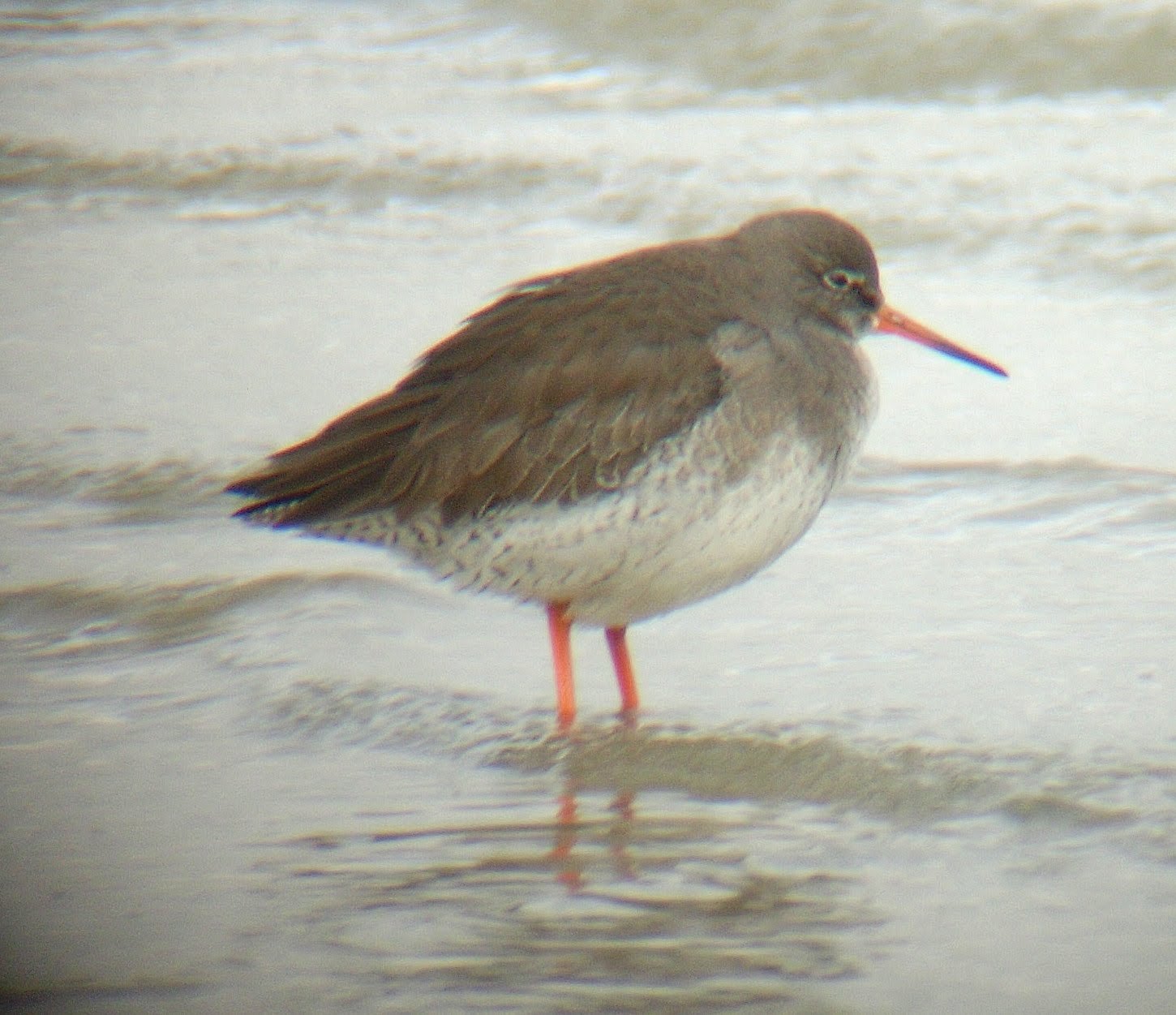
COMMON REDSHANK at Wilstone


Wilstone - late Friday morning 28/1/11

Called in at a bitterly cold Wilstone, on my way home from the Aylesbury Waxwings just off Griffin Lane, to pick up some yearly ticks - Pintail, Goldeneye and Redshank. Fingers too numb to hang around looking for the Goosander.
Surprisingly, the Fairford Leys Estate is a great place for birdwatching, helped by the River Thame tributory Bear Brook running through it. On the 14 January I had two yearly ticks there of Reed Bunting (quite a few) and close views of a flock of Siskin feeding on alder seeds just above one of the many footpaths adjacent to Aylesbury Park Golf Club. Yesterday a Little Egret landed somewhere in the area (Sally Douglas).

First-winter MED GULL roosts again this evening


Wilstone: the first-winter MEDITERRANEAN GULL was in the roost again (picture above) and redhead GOOSANDER still present

Marsworth: 2 BITTERNS still, one roosting in the far reedbed and the usual bird near the first cut channel (Dave Bilcock).

Friday, 28 January 2011

MED and YELLOW-LEGGED GULL roosted

A finger numbing cold late afternoon gull-watch with Steve Rodwell and Ian Williams was rewarded with a 1W MEDITERRANEAN GULL amongst ca.4500 BHGs present. Just as it was getting dark an adult YELLOW-LEGGED GULL also joined the roost.

Wednesday, 26 January 2011

An influx of PINTAIL

This morning someone had obviously let the PINTAIL out again. There were thirteen this morning – seven of these were males. Also the female Goosander was back and with the 500+ Lapwing there were 36 Golden Plover.

There is now very little mud left and the water level has covered the lower depth marker by the jetty completely now (Roy Hargreaves)